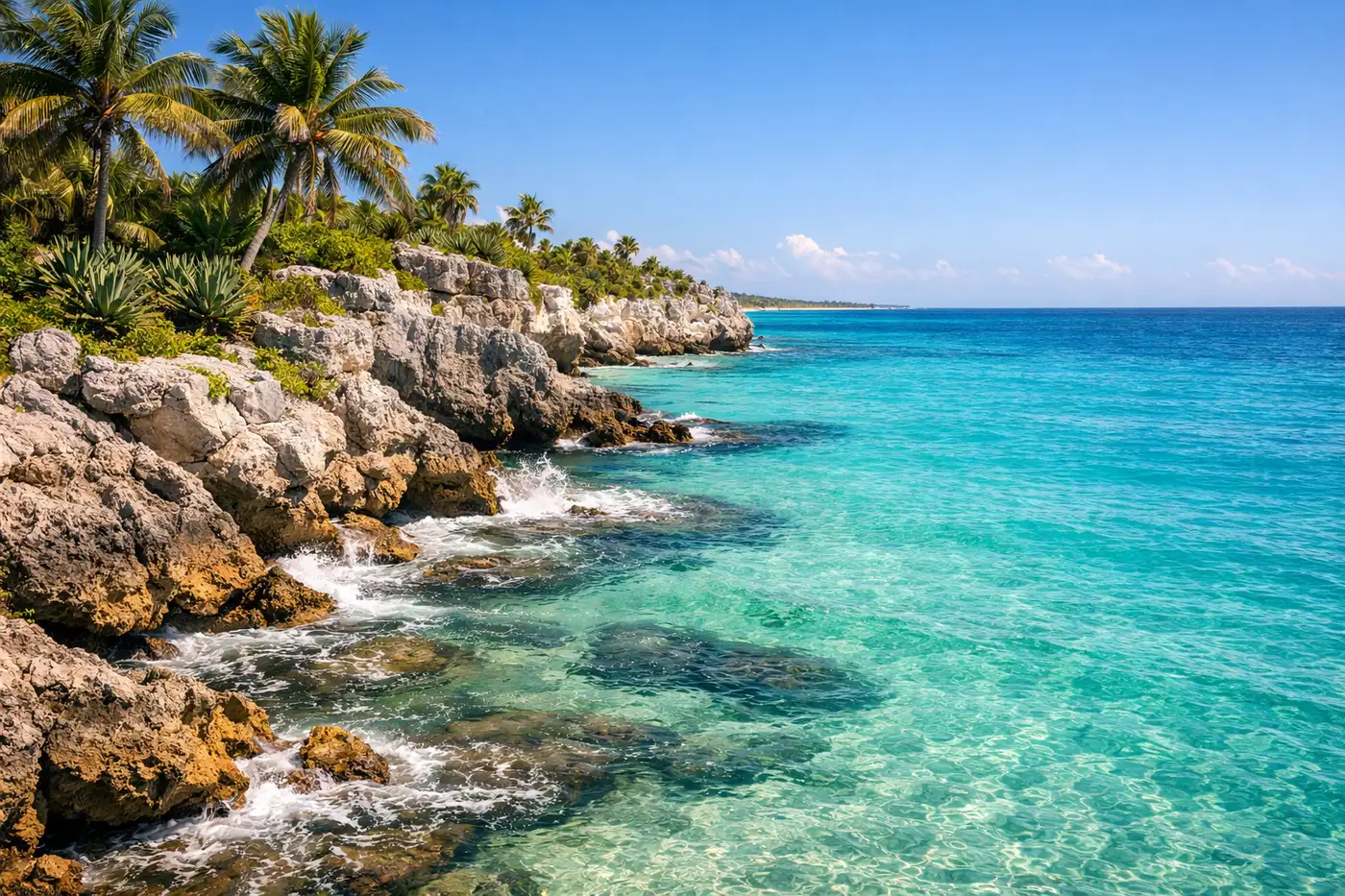



The Tulum archaeological site is one of the most meaningful places to explore Mayan history on the Caribbean coast. Set on a limestone cliff above the sea, this ancient walled city brings together architecture, trade, ritual life and one of the most memorable views in the Riviera Maya.
Once an important port, Tulum connected inland Mayan communities with maritime routes along the Yucatán coast. Today, visitors can walk among temples, walls and sea-facing viewpoints while learning how this city lived between land and ocean.
A good visit combines historical context with simple planning: arrive early, bring sun protection, respect the marked paths and allow enough time to enjoy both the ruins and the landscape.
Tulum, the walled Mayan city by the sea
Tulum is often remembered for its unique setting: pale stone buildings, tropical vegetation and the Caribbean Sea stretching below the cliff. Yet its beauty is only part of a wider story.
The city was once one of the most important coastal settlements of the late Mayan period. However, unlike many major Mayan sites built inland, Tulum developed directly by the sea, in a position that supported three different functions: trade, navigation and defense. Its walls, temples and elevated viewpoints reveal a place shaped by both practical needs and symbolic meaning.
The name Tulum is commonly associated with the idea of a wall or enclosure, and this is one of the first features visitors notice. The site is surrounded on three sides by stone walls, while the fourth side faces the sea. This layout made the city distinct: protected from the land, open to the Caribbean.
For travelers interested in Mayan history, Tulum offers an accessible and powerful introduction: despite not being the largest archaeological site in the region, its coastal position surely makes it one of the most evocative.
A Mayan port city facing the Caribbean
Tulum’s location was thus essentially strategic. From the cliff, the city could oversee movement along the coast and maintain contact with maritime trade routes; meanwhile, goods, people and ideas moved through this area, connecting Tulum with other settlements across the Yucatán Peninsula and beyond.
The city likely played an important role in the exchange of products such as salt, cacao, textiles, obsidian, feathers and marine resources, as its position served as a coastal gateway for inland communities, including larger centers connected to regional networks. This cultural richness is one of the reasons visiting the Tulum ruins is more interesting when viewed through a historical lens.
Overall, the site was not an isolated ceremonial place but part of a wider world of trade and cultural exchange, with the sea integral to the city’s very identity.
What to see inside the Tulum ruins
The Tulum ruins can be explored on foot, following marked paths that connect walls, open spaces, temples and viewpoints. Many structures are only admired from the outside to protect the archaeological remains, but the route still gives a clear sense of how the city was organized.
El Castillo
El Castillo is, hands down, the most iconic structure in the Tulum archaeological site. Built near the cliff edge, it dominates the landscape and creates the image most visitors associate with the ruins.
Its position suggests both ceremonial and practical importance. From this point, the view opens toward the Caribbean, reinforcing Tulum’s connection with navigation and coastal life. Standing nearby, it is easy to understand why this place became such a recognizable symbol of Mayan history in Tulum.
Temple of the Frescoes
The Temple of the Frescoes is one of the most important structures for understanding the city’s symbolic life, as its decorations and architectural details point to ritual practices, religious imagery and the careful observation of natural cycles.
For first-time visitors, this is a place where a guide can make a real difference. Many details are not immediately visible, but they add depth to the experience once thoroughly explained.
Temple of the Descending God
The Temple of the Descending God is associated with one of Tulum’s most recognizable figures in its iconography. The image, often interpreted in relation to the sky, fertility or divine descent, appears in a position that immediately attracts attention.
Interpretations vary, but the figure helps visitors understand the extent of meaning embedded in Mayan architecture, especially since buildings carried countless symbols and references to the spiritual world.
Temple of the Wind God
Close to the coast, the Temple of the Wind God is another memorable stop. Its position makes the connection between architecture and landscape especially clear.
Wind, sea and navigation were central to life in a coastal city. This small structure is often photographed for its view, but it also invites a deeper reading of how natural forces shaped Tulum’s identity.
The landscape as part of the experience
In the Tulum ruins area, the landscape is never separate from the archaeological site. The cliff, sea, vegetation and light all help explain why the city was built here.
The elevated position offered visibility; the coastline supported movement and exchange; the natural setting added symbolic power to the temples and public spaces. Even today, the experience of walking through Tulum is shaped by this relationship between architecture and environment.
This synergy is what makes the site so distinctive: once there, you’ll be reading a city through its position in the world.
For travelers staying in Tulum, the visit also gives a wider sense of place. The beach, the jungle, the cenotes and the archaeological sites are all part of the same regional story: a landscape where nature and culture have been connected for centuries.
Visiting Tulum ruins tips: when to go and how to plan
The best time to visit the Tulum ruins is early in the morning, as close to opening time as possible, because temperatures are usually more comfortable, the light is softer and the site tends to feel calmer before the busiest hours of the day.
Late afternoons can also be pleasant, especially for warmer light and a slower atmosphere. Before planning your visit, always check current opening hours and last-entry times, as schedules may change.
Most visitors spend around 1.5 to 2.5 hours at the site: this window allows enough time to walk the main route, stop at the most important structures, take photographs and enjoy the sea views without rushing.
If you want more historical context, consider visiting with an authorized guide who can explain the functions of the main buildings, the role of Tulum as a port city and the meanings of symbols that are easy to miss during an independent visit.
What to bring for a comfortable visit
Since the Tulum archaeological site is open-air, with sunny paths and limited shade in several areas, a few simple choices can make the visit much more enjoyable.
Bring water, a hat, sunglasses and high-protection sunscreen. Lightweight clothing is highly recommended, especially in breathable fabrics. Comfortable shoes are also important: the visit is not difficult, but the route includes uneven ground, stone paths and exposed areas.
A charged phone or camera is useful, as the site offers some of the most photogenic views in the Riviera Maya. And if you plan to continue toward the beach or combine the ruins with another stop, keep your bag light and practical.
Finally, it is always a good idea to carry some Mexican pesos for small expenses, tips or services near the entrance.
Preserving Tulum’s heritage during your visit
The Tulum ruins are part of Mexico’s cultural heritage, and visiting with care helps protect the site and makes the experience better for everyone.
Here are a few rules of thumb that will certainly be useful during your visit:
- Stay on marked paths, follow signs and respect staff guidance: the routes are designed to protect both visitors and the archaeological remains, while allowing everyone to enjoy the site safely.
- Do not climb on structures unless access is clearly permitted: many buildings are fragile, and even small, repeated impacts can damage ancient surfaces over time.
- Avoid touching fragile surfaces: stone, stucco and decorative details may be more delicate than they appear, especially after centuries of exposure to sun, wind and salt air.
- Never remove stones, shells or other natural elements from the area: even small objects are part of the site’s landscape and should remain where they belong.
- Keep the site clean and take your waste with you: a respectful visit also means leaving no trace of your presence, especially in a coastal environment where litter can affect both the archaeological area and the surrounding nature.
These rules are simple, but they matter. Archaeological sites are not only places to photograph, but tangible traces of real communities and beliefs. Moving through them with attention is part of the visit.
Guide, self-guided visit or cultural tour?
There is no single best way to visit Tulum ruins: the right choice depends on how much context you want and how you prefer to travel.
An organized visit is ideal if you are interested in Mayan culture and want to understand the site beyond its most famous views, as a professional guide can help connect the buildings to the city’s history and explain the roles of symbols, walls and coastal orientation.
A self-guided visit gives you more freedom, and it works well if you prefer a quiet rhythm, want time for photography or already have some knowledge of Mayan history.
A cultural tour can be useful if you want to combine Tulum with other nearby experiences, such as cenotes, natural reserves or another archaeological site.
Beyond Tulum: adding Cobá to your Mayan history itinerary
Travelers who want to explore Mayan history in greater depth can consider adding Cobá to their itinerary. While Tulum offers a coastal perspective, Cobá introduces a different landscape: an inland setting, surrounded by vegetation and connected to a wider network of ancient roads.
The contrast between the two sites is part of the appeal. Tulum speaks of sea routes, trade and a fortified coastal city; Cobá offers a sense of a larger inland center, with causeways, forest paths and monumental structures.
Access rules at archaeological sites can change, so it is always best to check current information before planning the day or ask our concierge for support. For many visitors, combining Tulum and Cobá creates a richer understanding of the region’s Mayan past.
A cultural morning by the sea
A visit to the Tulum ruins makes for an unforgettable half-day experience. Start early, explore the archaeological site at an unhurried pace and take time to pause at the sea-facing viewpoints. If you choose a guide, let the historical explanation shape the first part of the visit, then leave space for quiet observation.
Afterward, the return to the beach will feel natural. The ruins add depth to the landscape you see throughout your stay: the same coast, seen through the lens of history.
For guests at The Beach Tulum Hotel, the archaeological site is close enough to enjoy with ease, yet meaningful enough to become one of the most memorable moments of the trip. It is also a way to connect with Tulum beyond its beauty, discovering the history that still lives in its stones, walls and view over the Caribbean.
Book your stay at our upscale resort today and start planning your dream Mexican vacation.